top of page

JOURNAL


Hello Beautiful Soul,


If you've been following along with this Heartstrings series, you've probably noticed a theme.


Children are constantly showing us who they are.


Through their interests.


Through their questions.


Through their passions.


Through the things they love.


Through the things they can't stop wondering about.


Through the activities they return to again and again.


The challenge is not noticing the heartstrings.


The challenge is trusting them.


Trust is difficult because the heart rarely gives us the entire map.


It offers a direction.


A pull.


A curiosity.


A next step.


But it rarely tells us where it all leads.


A child who loves drawing at six is not handed a blueprint for their future.


A child who spends hours building forts is not told how those experiences will shape them.


A teenager fascinated by photography, music, animals, history, nature, mechanics, cooking, or storytelling cannot possibly know how those interests will weave themselves into their life.


The heart doesn't work that way.


It simply says:


This matters.


Come a little closer.


Explore this.


Learn more.


Pay attention.


As parents, this uncertainty can feel uncomfortable.


We want guarantees.


We want to know that our children will be successful.


We want reassurance that they are on the right path.


We want to know that the time they spend pursuing their interests will somehow pay off.


But life doesn't often offer those kinds of promises.


Instead, it offers something else.


Clues.


When we look back on our own lives, we can often see how seemingly unrelated experiences connected in ways we never could have predicted.


The books we loved.


The people who inspired us.


The hobbies we pursued.


The struggles we endured.


The skills we developed.


The passions we followed.


At the time, they may have seemed disconnected.


But years later, we can often see the thread that was quietly weaving them together.


Children deserve the same opportunity.


They deserve the freedom to explore before they know where exploration will lead.


They deserve the freedom to become before they decide who they are.


They deserve the freedom to follow curiosity without constantly being asked what it will amount to.


Sometimes we forget that childhood is not preparation for life.


Childhood is life.


The purpose of a child's interests is not simply to produce a future outcome.


The purpose is the experience itself.


The learning.


The growth.


The joy.


The discovery.


The becoming.


This is where trust enters the picture.


Trust does not mean becoming passive.


Trust does not mean removing all guidance.


Trust does not mean believing that every choice a child makes is perfect.


Trust means recognizing that there is wisdom within the child.


It means understanding that curiosity serves a purpose.


It means believing that interests matter.


It means allowing children to develop a relationship with their own inner guidance.


And perhaps most importantly, trust means letting go of the idea that we know exactly how their story should unfold.


The older I get, the more I realize that much of parenting is learning to stand beside mystery.


We are given these incredible human beings.


We guide them.


We love them.


We support them.


We protect them.


And then, little by little, we learn to trust what is emerging within them.


Not because we know where it leads.


But because we trust the source from which it comes.


The heartstrings.


Those invisible pulls toward what is meaningful, life-giving, and true.


Perhaps that is the invitation for all of us.


Not only to trust our children's heartstrings, but to trust our own.


To notice what pulls at us.


To pay attention to what keeps returning.


To honor what sparks curiosity and aliveness.


To take the next step, even when we cannot see the entire path.


Because the heart has never required us to know the destination.


It has only ever asked us to trust the pull.


With Love,

Maria

Hello Beautiful Soul,


If heartstrings are the invisible pulls that guide our children toward what they love, then the question becomes:


What helps those heartstrings grow stronger?


As parents, we often feel responsible for teaching, directing, encouraging, and providing opportunities for our children. We spend a great deal of time wondering if we are doing enough.


Are they learning enough?


Are they involved in enough activities?


Are they developing the right skills?


Are they prepared for the future?


These questions come from a place of love.


But over the years, both as a teacher and as a parent, I have noticed something important.


Children do not always need more instruction.


Sometimes they need more space.


Space to think.


Space to wonder.


Space to create.


Space to explore.


Space to become absorbed in something that matters to them.


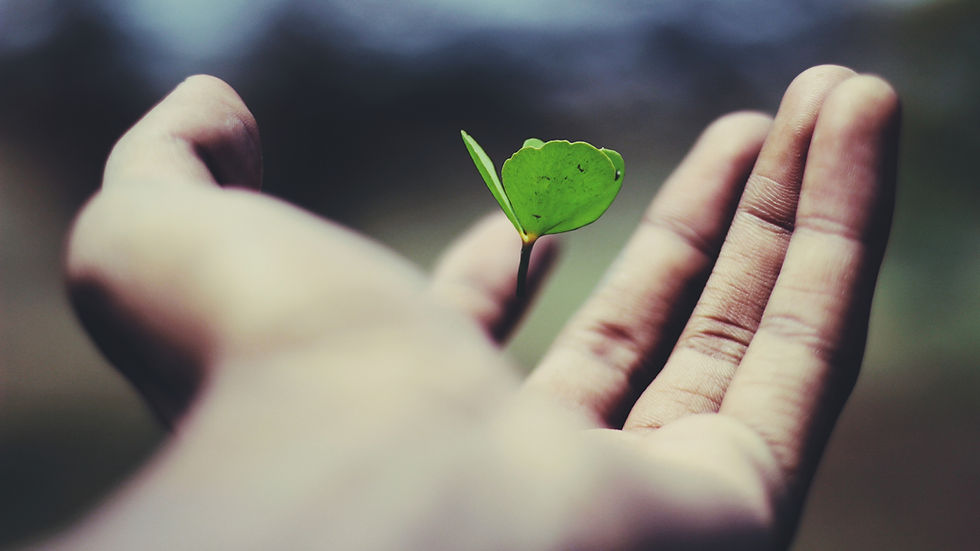
When a seed is planted, we don't pull on the stem to make it grow faster. We don't stand over it demanding that it become a flower.


We create the conditions that support growth.


We provide sunlight.


Water.


Healthy soil.


And then we trust the process.


Children are not so different.


One of the greatest gifts we can offer is an environment that welcomes curiosity.


A basket of art supplies within reach.


Books scattered throughout the house.


Nature to explore.


Open-ended materials that can become a hundred different things.


Time without constant entertainment.


Conversations that invite wondering rather than simply delivering answers.


An environment sends a message.


It tells children what is valued.


It tells them what is possible.


It tells them whether their interests belong.


When a child who loves building has access to blocks, cardboard, tape, tools, and materials, their curiosity deepens.


When a child who loves stories is surrounded by books, storytelling, writing materials, and people who enjoy reading, their imagination expands.


When a child who loves nature has opportunities to observe, collect, explore, and ask questions, their relationship with the natural world grows stronger.


The environment doesn't create the heartstring.


The heartstring is already there.


The environment simply gives it room to grow.


The same is true for us.


As adults, we often assume we have outgrown the need for supportive environments.


But if we're honest, our surroundings still affect us.


A neglected journal tucked away in a drawer is less likely to be written in than one resting on the kitchen table.


Walking shoes by the door invite movement.


A stack of books beside the bed invites reading.


Art supplies within reach invite creativity.


The environment either supports what we love or competes with it.


This is why creating a life that honors our heartstrings is not simply an inner journey.


It is also a practical one.


We can ask ourselves:


What is my child drawn to?


How can I make room for more of that?


What am I drawn to?


How can I make room for more of that?


These questions shift our focus from controlling growth to supporting it.


From directing to observing.


From pushing to trusting.


The truth is that most children do not need us to tell them who they are.


They are showing us every day.


Through their interests.


Through their questions.


Through their play.


Through the things they return to again and again.


Our role is not to decide which heartstrings matter.


Our role is to notice them, nurture them, and protect them.


To create an environment where they can continue to unfold.


And perhaps, in doing so, create an environment where our own heartstrings can unfold as well.


Because the things that want to grow within us and within our children often need the same thing.


A little space.


A little support.


And someone willing to trust what is becoming.


With Love,

Maria


Hello Beautiful Soul,


Have you ever noticed how children become fascinated by certain questions?


One child wants to know everything about sharks. Another wants to understand how airplanes stay in the sky. Another asks endless questions about space, bugs, weather, animals, dinosaurs, machines, or people.


Sometimes the questions seem random.


But if we pay close attention, we begin to notice that curiosity has a pattern.


Children don't wonder equally about everything. They are naturally drawn toward certain subjects, experiences, and ideas. They return to them repeatedly. They ask deeper questions. They seek more information. They become absorbed.


Something is pulling at them.


Something wants to be explored.


As parents, it can be tempting to focus on the answers. We try to explain. We teach. We provide information. We look things up.


But what if the real gift isn't the answer?


What if the gift is the curiosity itself?


Curiosity is one of the ways the heart communicates.


Long before children know who they are becoming, curiosity begins leaving breadcrumbs. It gently guides them toward experiences, skills, knowledge, and relationships that belong to their journey.


A child who is fascinated by nature may not become a scientist.


A child who loves stories may not become a writer.


A child who asks endless questions about people may not become a counselor.


But the curiosity itself is still important because it is developing something within them. It is shaping the way they see the world. It is helping them discover what feels meaningful, alive, and engaging.


The problem is that many adults have learned to ignore their own curiosity.


Somewhere along the way, we begin believing that curiosity is a luxury rather than a guide.


We become busy.


Responsible.


Productive.


We stop asking questions simply because we want to know.


We stop exploring things simply because they interest us.


Instead, we focus on what is practical, useful, or expected.


Yet curiosity never completely disappears.


It simply waits.


You can often feel it in the books that catch your attention, the conversations you want to have, the classes you've thought about taking, the hobbies you've wanted to try, or the topics you find yourself researching late at night.


The same force that guides children is still alive within us.


It may be quieter now.


But it is still there.


This is one of the reasons I believe children have so much to teach us.


When we watch them follow their curiosity without apology, we are reminded of something we once knew ourselves.


We remember what it feels like to explore for the sheer joy of exploring.


We remember what it feels like to be pulled by wonder.


And perhaps that is why protecting a child's curiosity matters so much.


Not because every interest will become a career.


Not because every question needs an answer.


But because curiosity strengthens a child's relationship with themselves.


It teaches them to trust what captures their attention.


It teaches them to follow what feels meaningful.


It teaches them that their interests matter.


As parents, we don't need to create curiosity.


It is already there.


Our role is simply to make room for it.


To listen when children wonder.


To provide opportunities for exploration.


To welcome questions we cannot answer.


To value the process more than the outcome.


And sometimes, if we're paying attention, to follow our own curiosity right alongside them.


So today, I leave you with a question:


What is your child curious about these days?


And perhaps even more importantly...


What are you curious about?


The answers may reveal more than you think.


With Love,

Maria

RED THREAD PARENTING

Hear the Latest News

Thanks for submitting!

©2021 THE NEUTRAL CO.

bottom of page