creating the space for what wants to grow
- Jun 13
- 3 min read
Hello Beautiful Soul,
If heartstrings are the invisible pulls that guide our children toward what they love, then the question becomes:
What helps those heartstrings grow stronger?
As parents, we often feel responsible for teaching, directing, encouraging, and providing opportunities for our children. We spend a great deal of time wondering if we are doing enough.
Are they learning enough?
Are they involved in enough activities?
Are they developing the right skills?
Are they prepared for the future?
These questions come from a place of love.
But over the years, both as a teacher and as a parent, I have noticed something important.
Children do not always need more instruction.
Sometimes they need more space.
Space to think.
Space to wonder.
Space to create.
Space to explore.
Space to become absorbed in something that matters to them.
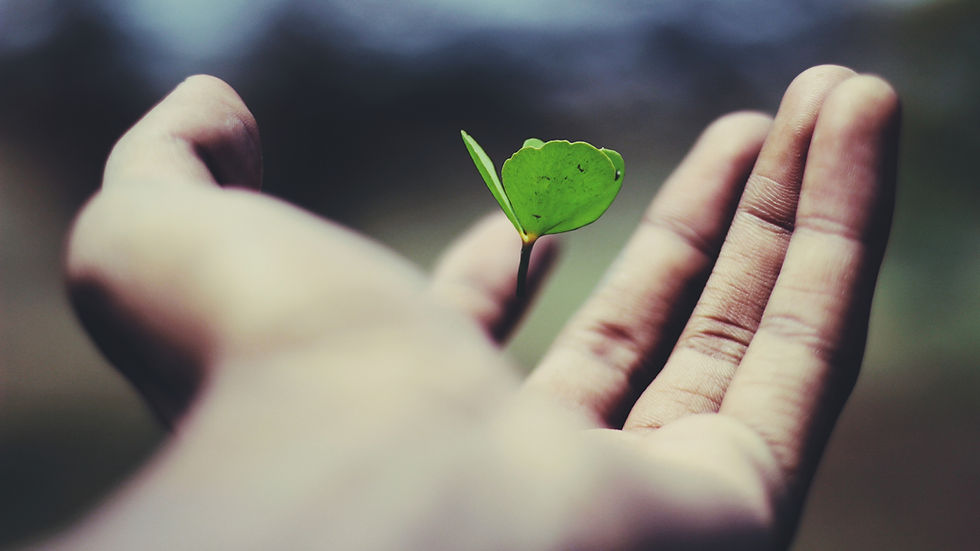
When a seed is planted, we don't pull on the stem to make it grow faster. We don't stand over it demanding that it become a flower.
We create the conditions that support growth.
We provide sunlight.
Water.
Healthy soil.
And then we trust the process.
Children are not so different.
One of the greatest gifts we can offer is an environment that welcomes curiosity.
A basket of art supplies within reach.
Books scattered throughout the house.
Nature to explore.
Open-ended materials that can become a hundred different things.
Time without constant entertainment.
Conversations that invite wondering rather than simply delivering answers.
An environment sends a message.
It tells children what is valued.
It tells them what is possible.
It tells them whether their interests belong.
When a child who loves building has access to blocks, cardboard, tape, tools, and materials, their curiosity deepens.
When a child who loves stories is surrounded by books, storytelling, writing materials, and people who enjoy reading, their imagination expands.
When a child who loves nature has opportunities to observe, collect, explore, and ask questions, their relationship with the natural world grows stronger.
The environment doesn't create the heartstring.
The heartstring is already there.
The environment simply gives it room to grow.
The same is true for us.
As adults, we often assume we have outgrown the need for supportive environments.
But if we're honest, our surroundings still affect us.
A neglected journal tucked away in a drawer is less likely to be written in than one resting on the kitchen table.
Walking shoes by the door invite movement.
A stack of books beside the bed invites reading.
Art supplies within reach invite creativity.
The environment either supports what we love or competes with it.
This is why creating a life that honors our heartstrings is not simply an inner journey.
It is also a practical one.
We can ask ourselves:
What is my child drawn to?
How can I make room for more of that?
What am I drawn to?
How can I make room for more of that?
These questions shift our focus from controlling growth to supporting it.
From directing to observing.
From pushing to trusting.
The truth is that most children do not need us to tell them who they are.
They are showing us every day.
Through their interests.
Through their questions.
Through their play.
Through the things they return to again and again.
Our role is not to decide which heartstrings matter.
Our role is to notice them, nurture them, and protect them.
To create an environment where they can continue to unfold.
And perhaps, in doing so, create an environment where our own heartstrings can unfold as well.
Because the things that want to grow within us and within our children often need the same thing.
A little space.
A little support.
And someone willing to trust what is becoming.
With Love,
Maria


Comments